Have you ever felt your heart racing, your chest tightening, and your thoughts moving faster than you can control? Panic can arrive suddenly. One moment everything feels normal; the next, your body seems to be preparing for danger.
During these moments, telling yourself to “just relax” may not be enough. Your body is experiencing a physical stress response, and sometimes the best place to begin is with your breathing.
One technique that may help is 4-7-8 breathing. It gives your attention something simple to follow and encourages slower, more controlled breathing when stress begins to build.
Let’s understand how it works, how to practise it, and why it may help you regain a sense of control.
Why Panic Feels So Overwhelming
When you experience fear or intense anxiety, your brain’s threat-detection system becomes more active. The amygdala plays an important role in processing potential threats and can contribute to the body’s fight-or-flight response.
Your body may respond with:
- A faster heartbeat.
- Shallow or rapid breathing.
- Muscle tension.
- Sweating or trembling.
- Racing thoughts and difficulty concentrating.
These reactions are part of the body’s natural stress response. They can feel frightening, especially when they happen unexpectedly.
In that moment, trying to force positive thoughts may not feel effective. A practical first step is to gently shift your attention towards something you can influence: your breathing.
What Is the 4-7-8 Breathing Technique?
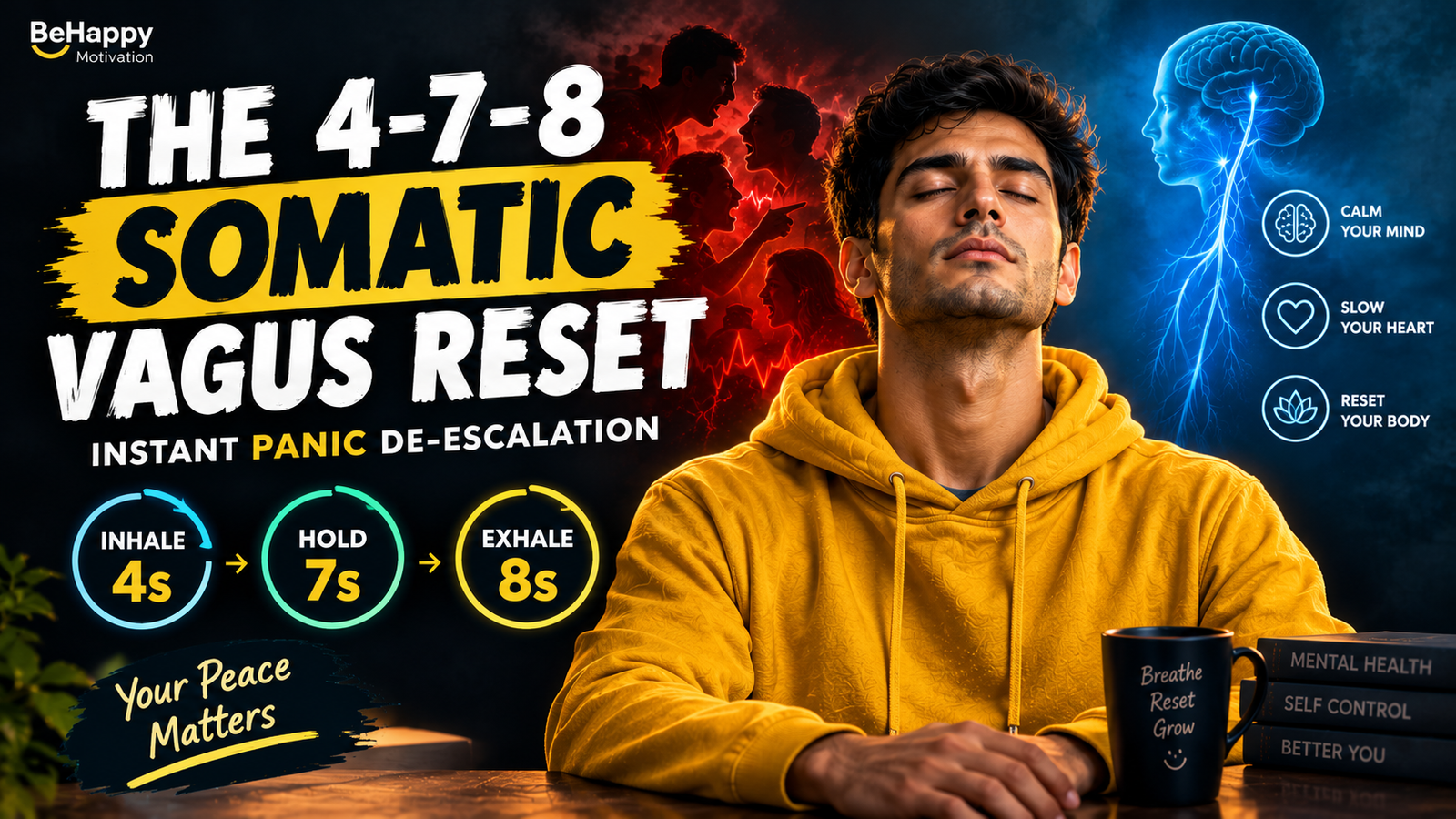
The 4-7-8 breathing technique is a structured breathing exercise popularised by Dr Andrew Weil. It uses three stages:
- Inhale for 4 seconds
- Hold for 7 seconds
- Exhale for 8 seconds
The extended exhalation encourages a slower breathing rhythm. Slow, comfortable breathing may support the parasympathetic nervous system, which is associated with the body’s rest-and-digest response.
The vagus nerve is an important part of this system. It helps regulate several automatic body functions, including aspects of heart rate and digestion.
However, this exercise should not be described as an instant vagus nerve reset. It does not force your heart rate to drop immediately, and there is no guaranteed 15-second cure for panic. Its value is in giving your body and mind a simple, repeatable calming practice.
How to Practise the 4-7-8 Breathing Reset
Step 1: Inhale for 4 seconds
Sit comfortably and relax your shoulders. Breathe gently through your nose for four seconds. Avoid taking an excessively deep breath.
Step 2: Hold for 7 seconds
Pause your breathing gently for seven seconds, but only if it feels comfortable. Never force yourself to hold your breath. If seven seconds feels difficult, shorten the pause or skip it.
Step 3: Exhale for 8 seconds
Slowly breathe out through your mouth for eight seconds. Keep your jaw and shoulders relaxed. Let the exhalation feel smooth rather than forced.
Step 4: Repeat gently
If you feel comfortable, repeat the cycle a few times. Pay attention to the rhythm instead of trying to achieve a particular result.
Important: A complete 4-7-8 cycle takes 19 seconds, not 15. If counting or breath-holding increases your anxiety, return to natural breathing or try a gentler pattern, such as breathing in for four seconds and out for six.
Why Does Slow Breathing Help?
Breathing is unusual because it happens automatically, but you can also influence it voluntarily. This makes it a useful tool for managing moments of stress.
1. It gives your attention a clear focus
Counting each breath can interrupt the cycle of repeatedly focusing on frightening thoughts.
2. It encourages a slower breathing rhythm
Gentle, slower breathing may help reduce the feeling of breathing too quickly and support a calmer physical state.
3. It may support relaxation
Slow breathing can influence the body’s autonomic nervous system, including pathways involving the vagus nerve.
4. It builds a practical coping habit
Regular practice when you are already calm can make the technique more familiar when stressful situations arise.
When Can You Use This Technique?
You can practise gentle breathing during everyday stressful moments, such as:
- Before an important meeting or presentation.
- When you feel overwhelmed by work.
- During moments of intense worry.
- Before going to sleep.
- When you notice tension building in your body.
You do not need to wait until panic becomes overwhelming. Practising a comfortable breathing rhythm regularly can help you become more familiar with it.
What If You Feel More Anxious While Breathing?
Not every breathing exercise works for everyone. Counting, holding your breath, or concentrating too closely on physical sensations can sometimes make anxiety worse.
If this happens:
- Stop the counting exercise.
- Return to natural, comfortable breathing.
- Relax your shoulders and unclench your jaw.
- Look around and identify five things you can see.
- Place your feet firmly on the floor.
Choose the approach that feels safe and manageable. You do not have to complete the full 4-7-8 cycle to benefit from taking a gentle pause.
If you experience new or severe chest pain, fainting, or serious difficulty breathing, seek urgent medical assessment rather than assuming it is panic. Recurrent or overwhelming panic symptoms are also worth discussing with a healthcare professional.
Final Thoughts: Take Control of the Next Breath
You cannot always control when stress appears. You cannot stop every worrying thought from entering your mind. But you can learn to respond to difficult moments with greater awareness.
The 4-7-8 breathing technique is not magic, and it is not an instant cure. It is a simple practice that may help you slow down, reconnect with the present moment, and create a little space between a stressful feeling and your next action.
The next time your thoughts begin racing, remember this:
You do not have to fight every thought. Start with one calm, comfortable breath.
Practise when you are relaxed, use it when appropriate, and give yourself permission to slow down.
Your peace is worth protecting.
Watch More on BeHappy Motivation
Want more practical ideas to improve your mindset, emotional control, mental wellness, and personal growth?
Subscribe to BeHappy Motivation TV on YouTube for motivational videos, psychology-based insights, and simple techniques to help you build a better version of yourself.
👉 Subscribe to BeHappy Motivation TV on YouTube
Stay motivated. Keep learning. Keep growing.
Frequently Asked Questions
1. Can the 4-7-8 breathing technique stop a panic attack instantly?
No. It may help some people feel calmer, but it cannot guarantee that a panic attack will stop instantly. Panic symptoms can take time to settle.
2. Does 4-7-8 breathing activate the vagus nerve?
Slow breathing can influence the autonomic nervous system, which includes pathways involving the vagus nerve. However, it is more accurate to describe this as supporting relaxation rather than instantly resetting the vagus nerve.
3. How many times should I practise 4-7-8 breathing?
Start with one or two comfortable cycles and see how you feel. You can gradually practise more if it feels comfortable. There is no need to force the breath-hold or extended exhale.
4. Can beginners try the 4-7-8 method?
Yes, but beginners should start gently. If holding your breath for seven seconds feels uncomfortable, shorten the pause or try a simple slow-breathing pattern instead.
5. Is 4-7-8 breathing a replacement for anxiety treatment?
No. It can be a useful self-management technique, but it does not replace professional assessment, therapy, or medical treatment when needed.