Mindfulness is a popular way to manage everyday stress, develop self-awareness, and bring more attention to the present moment. However, many people experience a common challenge when they begin meditating: their minds keep wandering.
Thoughts about work, family responsibilities, unfinished tasks, and future plans can interrupt even a short meditation session. This is normal. Mindfulness is not about eliminating every thought but learning to notice distractions and gently return your attention to the present.
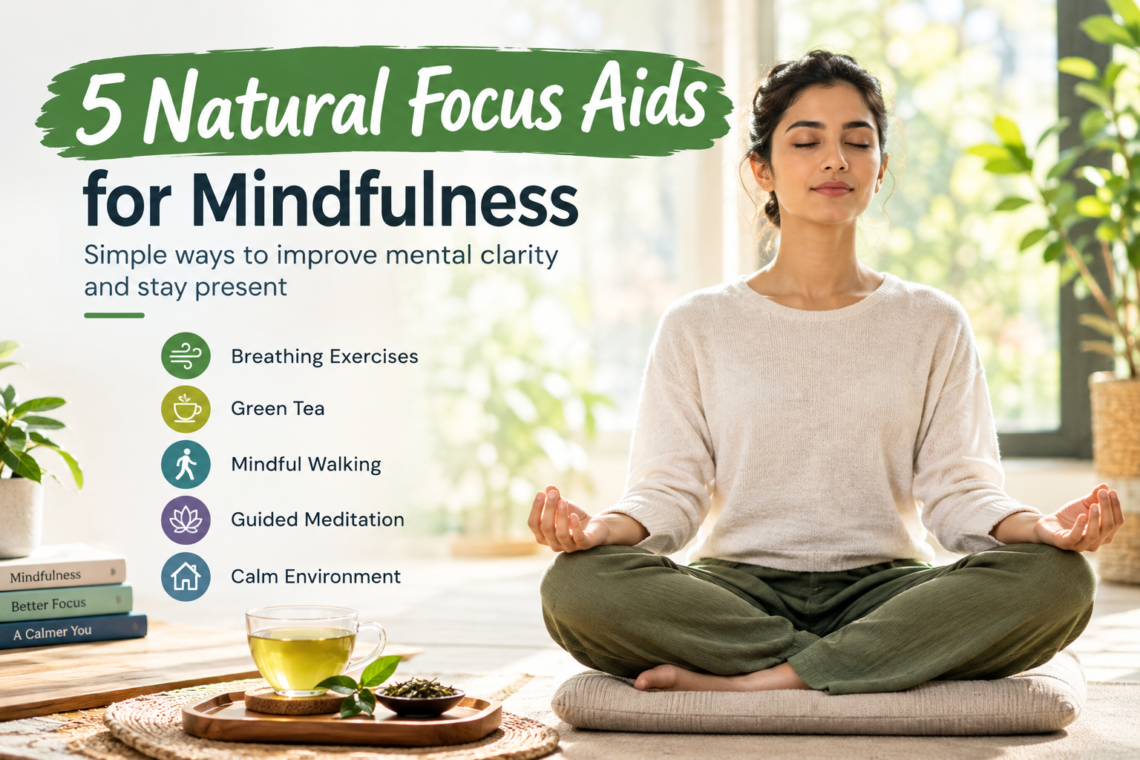
Several natural focus aids can support this process. From breathing exercises and mindful walking to green tea and a distraction-free environment, the right approach can make mindfulness easier to practise consistently.
1. Breath Counting: A Simple Way to Train Attention
Breath counting is one of the easiest focus aids for beginners. It does not require special equipment, supplements, or a meditation app.
Sit comfortably and pay attention to your natural breathing. Count each exhalation from one to ten, then start again. If you lose count because your mind wanders, simply return to one without judging yourself.
The important part is not maintaining a perfect count. It is recognising distraction and bringing your attention back.
Research on mindfulness suggests that meditation may support emotional well-being and help some people manage stress and anxiety, although results vary depending on the practice and individual. The National Center for Complementary and Integrative Health provides an overview of the current evidence.
2. Green Tea for Gentle Alertness
Green tea is another option people choose when they want to feel more alert without consuming a large amount of coffee.
It contains caffeine, which can temporarily increase alertness, along with L-theanine, a naturally occurring amino acid. Research has examined these compounds for their possible effects on attention and cognition, but evidence that green tea specifically improves mindfulness is limited.
If you enjoy green tea, consider having a small cup earlier in the day. Avoid relying on caffeine to force concentration, especially if you are sensitive to stimulants.
Caffeine can cause restlessness, anxiety, palpitations, and sleep disruption in some people. If these effects occur, choose decaffeinated tea or skip it altogether. Tea is optional; mindfulness does not require a stimulant.
3. Mindful Walking for a Restless Mind
Not everyone finds it comfortable to sit still for meditation. For people who feel restless, mindful walking offers an accessible alternative.
Walk slowly in a safe, quiet area. Notice the sensation of your feet touching the ground, the movement of your legs, and the sounds around you.
When your attention shifts to unrelated thoughts, return to the physical experience of walking.
Mindful walking combines gentle movement with present-moment awareness. It can be especially useful when you feel mentally overloaded after a long day or find seated meditation difficult to maintain.
4. Guided Meditation and Focus Timers
Guided meditation recordings can help beginners understand what to do when their attention wanders. A calm voice can provide reminders to observe thoughts, notice sensations, and return to breathing.
A simple timer can also help. Start with five minutes rather than setting an ambitious target of thirty minutes or more.
Keep your phone on silent or Do Not Disturb, and choose a consistent time and location. Reducing interruptions makes it easier to develop a sustainable routine.
5. Create a Calm, Comfortable Environment
Your surroundings can influence how easily you settle into mindfulness. A comfortable seat, soft natural lighting, and a quiet space may make the practice more inviting.
You do not need expensive meditation cushions, essential oils, sound machines, or specialised equipment. These items may improve comfort or enjoyment for some people, but they are not essential for developing attention.
Prioritise a comfortable posture, fewer distractions, and a regular schedule.
6. Build a Simple Daily Mindfulness Routine
Consistency is generally more useful than attempting a long session occasionally. Try this ten-minute routine:
- Minutes 1–2: Sit comfortably and relax your shoulders.
- Minutes 3–7: Count your natural exhalations from one to ten.
- Minutes 8–9: Notice nearby sounds without trying to identify or judge them.
- Minute 10: Observe how you feel before returning to your activities.
Practise daily for two weeks and reflect on whether it becomes easier to notice distractions and return to the present.
Remember that a wandering mind does not mean you are failing. Recognising that your attention has drifted is an important part of mindfulness practice.
Safety Considerations and Common Mistakes
Avoid forceful breathing or prolonged breath-holding, especially if these techniques make you dizzy or uncomfortable. Return to normal breathing if you feel light-headed.
Mindfulness is generally considered low-risk, but some people experience increased anxiety or emotional distress during meditation. If this happens, stop, open your eyes, and focus on your surroundings. Consider seeking guidance from a qualified mental health professional if the distress persists.
Do not use caffeine or supplements as a substitute for adequate sleep, balanced nutrition, or appropriate medical care. Persistent difficulty concentrating may have several causes and deserves professional assessment if it affects daily life.
Conclusion
The most practical focus aids for mindfulness are often the simplest: breath counting, mindful walking, guided meditation, and a quiet environment. Green tea may offer a modest alertness boost for some people, but it is not necessary for effective practice.
Start with one technique, practise consistently, and allow your attention to wander without frustration. Over time, mindfulness can become a useful way to approach everyday thoughts and distractions with greater awareness.
Frequently Asked Questions
1. What is the best focus aid for mindfulness beginners?
Breath counting is a good starting point because it is free, simple, and does not require equipment.
2. Does green tea improve mental clarity during meditation?
Green tea contains caffeine, which may temporarily improve alertness. However, strong evidence that it specifically improves meditation outcomes is lacking.
3. How long should beginners meditate?
Start with five to ten minutes daily. Increase the duration gradually if it feels comfortable and sustainable.
4. Is it normal for the mind to wander during meditation?
Yes. Mind-wandering is common. The aim is to notice when it happens and gently redirect attention without self-criticism.
5. Do I need supplements to improve mindfulness?
No. Supplements are not required for mindfulness. Simple attention exercises and a consistent routine are sensible first steps.
focus aids for mindfulness, mental clarity, mindfulness meditation, natural focus techniques, meditation for beginners, breathing exercises, green tea benefits, mindful walking, concentration techniques, mental wellness