Introduction
Have you ever reacted in anger and regretted your words a few minutes later? Have you ever allowed fear, disappointment, or overthinking to influence a decision you later wished you had made differently?
These experiences are part of being human. Emotions influence how we think, communicate, make decisions, and respond to challenges. The goal is not to eliminate emotions or pretend that nothing affects us. It is to understand what we feel and choose how we respond.
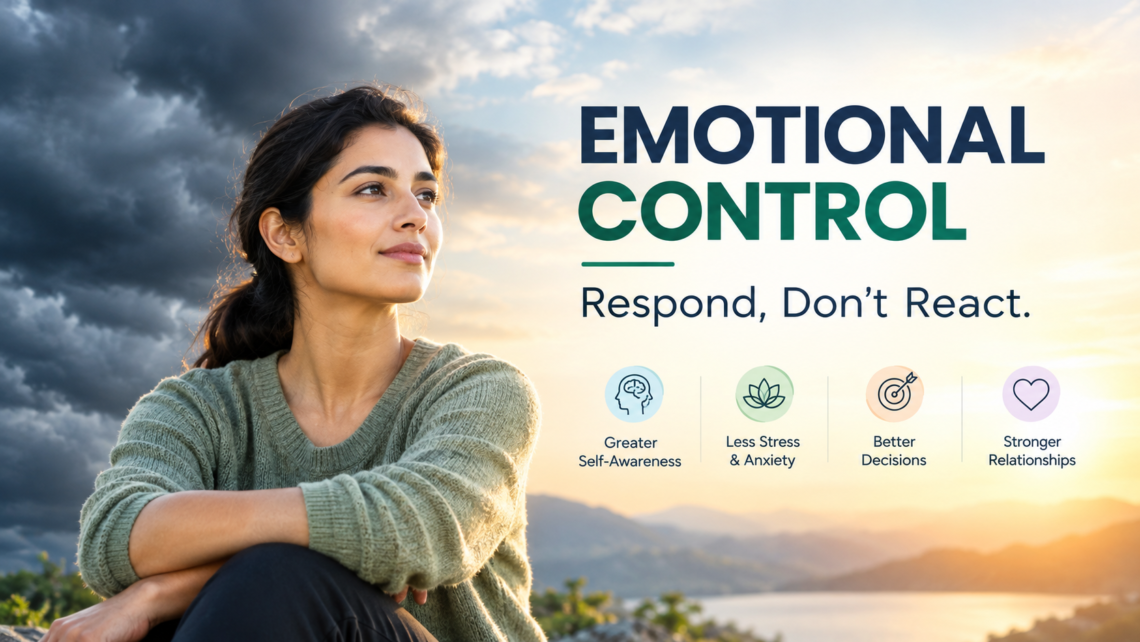
Emotional control is the ability to recognise your feelings, manage your reactions, and respond thoughtfully rather than impulsively. It is a skill that can improve with awareness, practice, and patience.
What Is Emotional Control?
Emotional control, often discussed as emotional regulation, means responding to feelings in ways that support your well-being and the situation at hand.
For example, feeling angry when someone criticises you is natural. Sending an aggressive message immediately is a reaction you can choose to delay. Taking a moment to understand the criticism, consider your response, and communicate calmly is an example of emotional regulation.
According to the American Psychiatric Association, emotional regulation involves recognising and managing feelings rather than ignoring them or allowing them to dictate every action.
Emotional strength does not mean never feeling hurt, anxious, frustrated, or disappointed. It means developing the ability to experience these feelings without automatically acting on every impulse.
Why Is Emotional Control Important?
1. It Helps You Make Better Decisions
Strong emotions can make immediate reactions feel more appealing than thoughtful decisions. Taking a pause gives you an opportunity to consider the consequences of your choices.
This is particularly useful during workplace disagreements, financial decisions, and difficult personal conversations.
2. It Improves Relationships
Unmanaged frustration can turn a small misunderstanding into a larger conflict. Learning to express feelings respectfully can make communication more constructive.
Emotional regulation also helps you listen to other people without immediately becoming defensive.
3. It Reduces the Impact of Overthinking
When something upsetting happens, the mind may repeatedly revisit the event. This process, sometimes called rumination, can keep uncomfortable feelings active.
Recognising repetitive thoughts and redirecting your attention toward a useful next step may help you avoid becoming trapped in the same mental loop.
4. It Builds Self-Awareness
Understanding your emotional triggers helps you recognise patterns. You may discover that lack of sleep, uncertainty, criticism, or feeling ignored makes you more reactive.
Once you identify these patterns, you can prepare healthier responses.
7 Practical Ways to Improve Emotional Control
1. Pause Before You React
When you feel angry or overwhelmed, avoid responding immediately if the situation allows it.
Take a few seconds, relax your shoulders, and notice what is happening inside you. In a difficult conversation, you might say, “I need a moment to think before I respond.”
A short pause can create space between an emotional impulse and your next action.
2. Name the Emotion You Are Feeling
Instead of saying, “Everything is going wrong,” try to identify the specific feeling: anger, embarrassment, disappointment, anxiety, or sadness.
Naming an emotion helps you understand your experience more clearly and decide what you need.
For example, anger may be connected to feeling disrespected, while anxiety may arise from uncertainty about the future.
3. Use Slow, Comfortable Breathing
When emotions intensify, breathing gently and slowly may help you settle.
Try breathing in comfortably for about four seconds and breathing out for about six seconds, without forcing the breath. Continue for one or two minutes if it feels comfortable.
Return to normal breathing if you feel dizzy or uncomfortable. Breathing is a coping technique, not a solution to every underlying problem.
4. Challenge Your First Interpretation
Emotional reactions are often influenced by the meaning we assign to an event.
Suppose a colleague does not reply to your message. You might immediately think, “They are ignoring me.” But there could be other explanations: they are busy, they missed the notification, or they need time to respond.
Ask yourself:
- What facts do I actually know?
- Am I assuming something without evidence?
- Is there another reasonable explanation?
- What response would help me handle this situation constructively?
This approach, known as cognitive reappraisal, is commonly used in psychological approaches to managing emotions.
5. Learn to Accept Uncomfortable Feelings
Trying to suppress every negative emotion can make it harder to understand what is bothering you.
Instead, acknowledge the feeling without treating it as a command. You can think, “I feel angry right now, but I can decide how to respond.”
Acceptance does not mean approving of unfair treatment or giving up on solving a problem. It means recognising your present emotional state before choosing your next step.
6. Build Healthy Daily Habits
Emotional regulation is harder when you are exhausted, stressed, or constantly distracted.
Support your emotional well-being by maintaining a regular sleep schedule, engaging in physical activity, eating balanced meals, and taking breaks when needed.
Mindfulness, journaling, and conversations with trusted people can also help you understand your emotional patterns.
7. Focus on What You Can Control
You cannot control every person’s behaviour, every unexpected event, or every outcome. You can work on your own communication, boundaries, preparation, and choices.
When a situation feels overwhelming, ask yourself: “What is one useful action I can take right now?”
Focusing on a manageable next step can be more productive than repeatedly analysing what you cannot change.
Emotional Control Is Not Emotional Suppression
One of the biggest misconceptions about emotional control is that strong people should never cry, feel anxious, admit disappointment, or ask for support.
In reality, emotional regulation and emotional suppression are different.
Suppression means attempting to hide or push down the outward expression of a feeling. Regulation means recognising the feeling and deciding how to respond to it.
You can be disappointed and still behave respectfully. You can feel afraid and still take a sensible step forward. You can be angry and communicate a clear boundary without insulting another person.
The aim is not to become emotionless. It is to respond with awareness and flexibility.
A Simple Five-Minute Emotional Reset
When you feel overwhelmed, try this short exercise:
Minute 1: Stop what you are doing, if it is safe to pause.
Minute 2: Notice your breathing and relax your body.
Minute 3: Name the emotion and identify what triggered it.
Minute 4: Separate the facts from your assumptions about the situation.
Minute 5: Choose one constructive next step—or give yourself more time before deciding.
This exercise will not solve every difficult situation, but it can help you approach the next moment more deliberately.
When Should You Seek Professional Support?
Everyone experiences difficult emotions. However, if anger, anxiety, sadness, or emotional outbursts frequently interfere with your relationships, work, sleep, or daily life, consider speaking with a qualified mental health professional.
Therapies such as cognitive behavioural therapy (CBT) and dialectical behaviour therapy (DBT) can teach practical skills for managing intense emotions. Seeking help is a constructive step, not a sign of weakness.
Conclusion
Emotional control is not about winning every argument, hiding your pain, or remaining calm in every situation. It is about understanding your feelings well enough to choose your actions.
Start by pausing before reacting, naming your emotions, questioning unhelpful assumptions, and practising healthier daily routines. Progress may be gradual, and setbacks are normal.
You may not be able to control every emotion that arises, but you can learn to respond to your emotions with greater awareness, patience, and wisdom.
Frequently Asked Questions
1. How can I control my emotions quickly?
If it is safe to pause, stop speaking or typing for a moment, breathe comfortably, name the feeling, and delay major decisions until you feel able to think more clearly.
2. Why do I get angry over small things?
Stress, fatigue, unmet expectations, unresolved conflict, and other factors can make reactions stronger. Tracking triggers may help you identify patterns. Persistent or intense anger may benefit from professional support.
3. Can emotional control be learned?
Yes. Skills such as mindfulness, cognitive reappraisal, problem-solving, and communicating boundaries can be practised and improved over time.
4. Is emotional control the same as emotional intelligence?
No. Emotional regulation is one part of emotional intelligence, which also includes recognising emotions, understanding them, and responding appropriately to other people’s feelings.
5. Does meditation help with emotional control?
Mindfulness meditation may help some people become more aware of their thoughts and emotional reactions. Benefits vary, and meditation is not a replacement for professional care when significant distress persists.
emotional control, how to control emotions, emotional regulation, emotional intelligence, anger management, mental strength, self-awareness, mindfulness, stress management, personal development