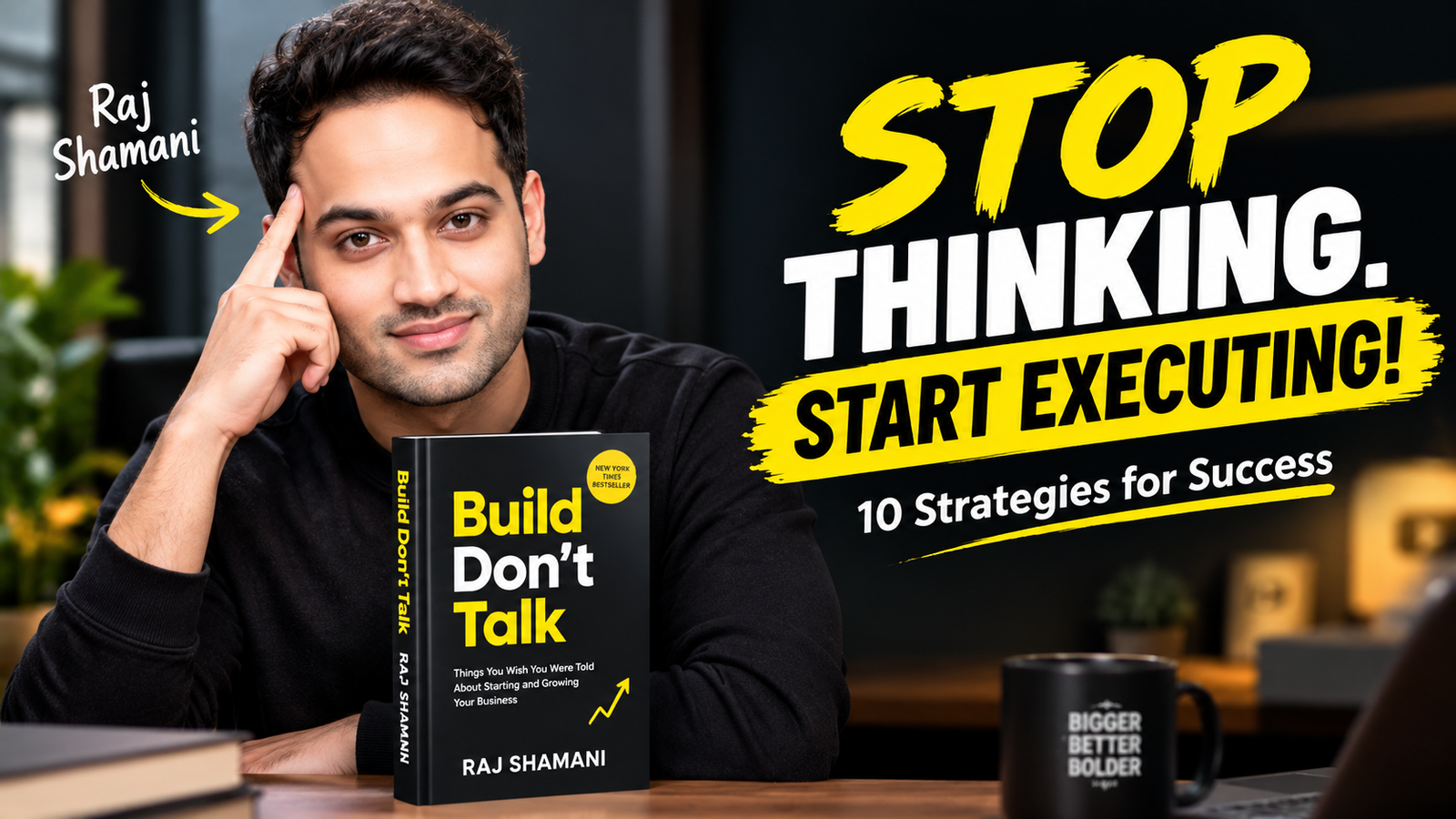
Have you ever had a brilliant idea but struggled to take the first step? You planned everything, researched every possibility, imagined different outcomes, and waited for the perfect moment. Yet, days passed, weeks disappeared, and nothing actually happened.
This is the hidden trap of overthinking. Many people don’t fail because they lack intelligence, talent, or opportunities. They fail because they spend too much time preparing and too little time executing.
In business, entrepreneurship, sales, and personal development, action creates progress. You don’t need to have everything figured out before starting. You need the courage to begin, learn from mistakes, and keep moving forward.
Here are ten powerful strategies to overcome procrastination and develop an execution-focused mindset.
1. Use the 30-Second Rule to Beat Procrastination
The hardest part of any task is often getting started. Your brain creates excuses, highlights possible difficulties, and convinces you to postpone action.
Instead of waiting for motivation, commit to working on a task for just 30 seconds.
Want to write a blog? Open your document and write the first sentence. Want to start exercising? Put on your shoes and begin. Want to launch a business? Write down your first three action steps.
Small actions reduce resistance and make bigger tasks feel manageable.
Remember, motivation often follows action, not the other way around.
2. Understand Why Emotion Matters More Than Logic in Sales
Successful selling is not simply about presenting product features. People also make purchasing decisions based on how a product or service makes them feel.
A strong sales conversation connects a customer’s problem with its emotional impact and a meaningful reason to act.
Instead of saying, “Our service has ten advanced features,” explain how those features can save time, reduce frustration, or make someone’s daily life easier.
The P+E+U sales approach highlighted in the video reinforces the importance of emotional connection over feature-heavy communication.
When customers understand the value and personal relevance of an offer, the conversation becomes more meaningful.
3. Win Price Negotiations Without Giving Discounts
One common mistake in business is reducing prices whenever a customer hesitates.
Discounting may help close an immediate sale, but excessive discounts can weaken perceived value and reduce profit margins.
The better strategy is to communicate value.
Explain the quality, reliability, long-term benefits, customer support, and results associated with your product or service.
Customers should understand what they are receiving, not simply how much they are paying.
A strong business does not compete only on price. It builds trust through value, experience, and consistent delivery.
4. Turn Public Failure Into Objective Data
Failure becomes painful when we treat it as a personal judgment rather than an opportunity to learn.
Imagine launching a product that receives negative feedback. Instead of feeling embarrassed, examine the response.
Ask yourself:
- What did customers dislike?
- Which expectations were not fulfilled?
- Was the pricing appropriate?
- Did the marketing message reach the right audience?
- What can be improved next time?
Every failed experiment provides information.
When you separate your identity from the outcome, failure becomes easier to analyse. You stop asking, “Why am I not good enough?” and start asking, “What should I change?”
5. Understand How Analysis Paralysis Kills Startups
Many startups spend months planning, researching competitors, discussing strategies, and perfecting presentations.
Meanwhile, competitors are testing products, speaking with customers, and improving their services.
This is analysis paralysis: becoming so focused on making the perfect decision that you stop making decisions altogether.
Business success requires experimentation. Launch a basic version, collect feedback, understand customer behaviour, and improve gradually.
A practical product in the market can teach you more than a perfect business plan sitting inside a laptop.
6. Unlearn the Traditional Education Hangover
Traditional education often rewards correct answers, structured thinking, and avoiding mistakes.
However, real-world business and entrepreneurship operate differently.
There is rarely one correct answer. Markets change, customer expectations evolve, and unexpected challenges appear.
Success requires curiosity, adaptability, independent thinking, and the willingness to experiment.
Education should provide a foundation, but it should not become a limitation on your ability to think differently.
Keep learning, question assumptions, and develop skills beyond textbooks.
7. Don’t Let Ego Become the Enemy of Execution
Ego can quietly destroy progress.
Sometimes people refuse to accept feedback because they believe admitting mistakes makes them look weak. Others avoid starting something new because they fear looking inexperienced.
But execution requires humility.
You must be willing to ask questions, accept criticism, change strategies, and learn from people who know more than you.
The goal is not to prove that you are always right. The goal is to make progress.
8. Understand the Difference Between Aspirants and Achievers
Aspirants talk about what they want to accomplish. Achievers focus on what they are doing to make it happen.
Both may have similar dreams, but their daily behaviour is different.
An aspirant says, “I want to build a successful business.”
An achiever asks, “What can I do today to find my first customer?”
The difference is consistent execution.
Measure your progress through completed tasks, not just plans, intentions, or motivational thoughts.
9. Make Failure a Turning Point, Not a Stopping Point
Failure presents two choices: withdraw or improve.
You can spend months regretting a failed opportunity, or you can examine what went wrong and make another attempt with better information.
This does not mean repeating the same mistakes blindly. It means using experience to make smarter decisions.
Successful people are not necessarily those who never fail. They are often those who learn, adapt, and continue despite setbacks.
10. Build Success Through Compounding Action
Small actions may not produce dramatic results immediately, but consistency creates momentum.
Writing one page daily improves your writing skills. Contacting a few potential customers every day strengthens your sales pipeline. Learning something new regularly expands your capabilities.
Over time, these small efforts can create significant results.
You do not need extraordinary progress every day. You need meaningful progress consistently.
Final Thoughts: Execution Is More Powerful Than Endless Planning
Ideas are valuable, but ideas alone cannot change your life. Knowledge is important, but knowledge without application rarely produces meaningful results.
Stop waiting for perfect conditions. Stop allowing fear, ego, and overthinking to control your decisions.
Start small, take action, learn from feedback, and improve your approach.
Whether you want to grow a business, build a career, improve your finances, or achieve personal goals, remember one simple principle:
The difference between people who dream about success and people who achieve it is often their willingness to take consistent action.
Your next big opportunity might not require another month of planning. It might simply require you to take the first step today.
Frequently Asked Questions (FAQs)
1. How can I stop overthinking and start taking action?
Break large goals into smaller tasks and begin with one manageable action. Focus on progress rather than perfection.
2. Why is execution more important than planning?
Planning provides direction, but execution creates real-world results, experience, and opportunities for improvement.
3. How can entrepreneurs overcome analysis paralysis?
Test ideas on a small scale, gather customer feedback, make informed decisions, and improve through experimentation.
4. How can I become more action-oriented?
Set daily priorities, establish realistic deadlines, track completed tasks, and develop the habit of starting without waiting for motivation.
5. How does failure contribute to success?
Failure provides feedback about decisions, strategies, and assumptions. Learning from it helps you make better decisions in the future.
Explore more personal growth and psychology insights on YouTube: https://www.youtube.com/@BeHappyMotivationTV