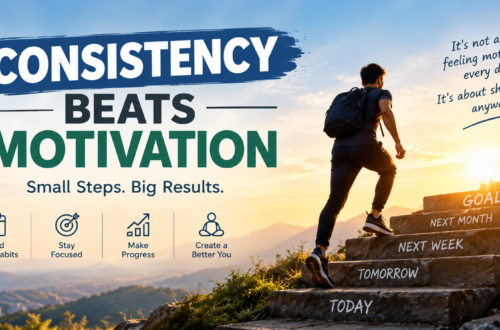
Introduction: Success Begins With How You Think
What separates top achievers from people who constantly struggle to reach their goals? It is not always intelligence, talent, or the number of hours they work. Often, the difference lies in how they think, make decisions, manage attention, and respond to challenges.
A peak performance mindset is a way of approaching daily life with clarity, purpose, discipline, and adaptability. Rather than allowing distractions, emotions, and urgent demands to control their day, high achievers develop systems that help them direct their mental energy toward meaningful outcomes.
From entrepreneurs and business leaders to athletes and creative professionals, successful individuals often recognize that effective performance begins long before the final result. It starts with the quality of their thinking.
The good news is that you do not need an extraordinary routine to develop these skills. Small, consistent changes in how you structure your day can help you improve focus, make better decisions, and work toward your goals more effectively.
1. They Begin the Day With Mental Clarity
Many people start their mornings by checking emails, scrolling through social media, or responding to messages. This immediately exposes their attention to other people’s priorities.
High performers can benefit from taking a different approach: beginning the day with intention.
Instead of reacting to every incoming demand, spend the first few minutes identifying what deserves your attention. Ask yourself three simple questions:
- What is the most important outcome I want to achieve today?
- Which task will make the greatest difference to my long-term goals?
- What distractions or obstacles could prevent me from making progress?
This simple exercise helps turn a vague to-do list into a clear direction for the day.
A morning routine does not need to be complicated. A few minutes of planning, light movement, journaling, or quiet reflection may be enough to create a more deliberate start.
The objective is not to follow a perfect routine. It is to begin the day by making conscious decisions instead of automatically reacting to your environment.
2. They Prioritize Deep Work Over Constant Busyness
Being busy does not necessarily mean being productive. Responding to messages, attending meetings, and switching between multiple tasks can create the feeling of progress without producing meaningful results.
One of the most useful productivity strategies is deep work: setting aside uninterrupted time for tasks that require concentration, creativity, or complex problem-solving.
For example, an entrepreneur might reserve the first 90 minutes of the workday for strategic planning instead of checking notifications. A student might study one difficult subject without switching between apps. A manager might block time to solve a business problem before attending routine meetings.
To make deep work practical:
- Choose one clearly defined task.
- Silence nonessential notifications.
- Keep your phone out of reach.
- Work in a focused block that suits your attention span.
- Take a short break before beginning the next demanding task.
You do not need to start with long sessions. Even 25–30 minutes of distraction-free work can help you build a more consistent focus habit.
The goal is to measure progress by the value of your output, not by how frequently you switch between tasks.
3. They Manage Their Cognitive Energy
High achievers understand that mental energy is not unlimited. Difficult decisions, complex conversations, and demanding projects require attention, so planning when to tackle them can make a difference.
Rather than assuming that every hour is equally productive, observe your own energy patterns. You may think most clearly in the morning, while another person may perform better later in the day.
Schedule your most demanding work during your strongest concentration window. Use lower-energy periods for routine administration, organizing files, or responding to straightforward messages.
Protecting cognitive energy also means avoiding unnecessary decisions. Preparing tomorrow’s priorities in the evening, keeping a consistent workspace, and creating repeatable routines can reduce the number of small choices you must make.
However, productivity should not become an excuse to ignore rest. Sleep, physical activity, psychological well-being, learning, and effective work habits are important dimensions of sustainable performance.
The objective is to manage your resources intelligently—not to push yourself to work at maximum intensity all day.
4. They Think in Priorities, Not Endless To-Do Lists
A long to-do list can overwhelm your attention because it presents every task as equally important. A peak performance mindset requires distinguishing between what is urgent and what genuinely matters.
Try the three-priority method. At the beginning of each day, identify three outcomes that would make the day successful. These might include completing a client proposal, developing a marketing strategy, and finishing an important learning task.
Break each outcome into a specific next action. Instead of writing “work on business,” write “draft the first section of the business proposal.”
This makes it easier to start and gives you a concrete way to measure progress.
You should also leave room for unexpected responsibilities. A realistic schedule includes flexibility, rather than filling every minute with planned activity.
Remember that prioritization is not about doing everything. It is about consistently giving your best attention to the work that matters most.
5. They Use Reflection to Improve Their Thinking
Successful people do not only focus on completing tasks; they also evaluate how they work and what they learn.
A short evening review can help you identify patterns that are difficult to notice when you move straight from one day to the next.
Ask yourself:
- What went well today, and why?
- Where did I lose focus?
- Which decision could I have handled better?
- What is one adjustment I can make tomorrow?
This process encourages self-awareness without turning reflection into self-criticism.
When something goes wrong, treat it as information. Perhaps a task was too vague, your schedule was unrealistic, or interruptions made concentration difficult. Identifying the cause helps you improve the system instead of simply blaming your motivation.
Over time, this habit can support better decision-making and more deliberate progress toward personal and professional goals.
6. They Protect Sleep, Movement, and Mental Recovery
A strong mindset cannot compensate indefinitely for poor recovery. Sleep, movement, and relaxation support the foundations of everyday cognitive performance.
Sleep plays an important role in attention, memory, and other cognitive processes. Regularly sacrificing sleep to work longer may undermine the very performance you are trying to improve.
Physical activity is another valuable part of a balanced routine. Research reviews have found that exercise can support aspects of cognition, memory, and executive function, although benefits vary across populations and types of activity.
Practical habits include:
- Maintaining a consistent sleep schedule.
- Incorporating regular physical activity into your week.
- Taking brief breaks during demanding work.
- Spending time away from screens.
- Allowing yourself to recover after mentally exhausting tasks.
Recovery is not a reward you earn only after finishing everything. It is part of a sustainable approach to performing well over time.
7. They Build a Growth-Oriented Mindset
Peak performance is not about being perfect every day. It is about responding constructively when progress slows, plans fail, or results fall short of expectations.
A growth-oriented mindset encourages you to view skills as developable through practice, feedback, and learning. Instead of asking, “Why am I not good at this?” ask, “What skill do I need to improve, and what can I try differently?”
This shift makes challenges more manageable and encourages consistent learning.
Set goals that are ambitious but realistic, track your progress, and review your methods regularly. Celebrate meaningful improvements without expecting every day to be equally productive.
Most importantly, avoid comparing your ordinary working day with another person’s carefully selected success stories. Your progress is better measured against your previous performance and the goals that matter to you.
A Practical Daily Routine for a Peak Performance Mindset
Here is a simple framework you can adapt to your own schedule.
| Time | Activity | Purpose |
|---|---|---|
| Morning | Review goals and plan priorities | Create direction |
| Early workday | Complete one demanding task | Protect focused attention |
| Midday | Eat, move, and take a break | Support energy and recovery |
| Afternoon | Handle meetings and routine tasks | Manage practical responsibilities |
| Evening | Review progress and prepare tomorrow | Learn and reduce uncertainty |
| Night | Follow a consistent wind-down routine | Support quality sleep |
Treat this schedule as a starting point, not a universal formula. Adjust it to your work commitments, personal responsibilities, energy levels, and sleep needs.
Conclusion: Train Your Mind for Consistent Progress
The peak performance mindset is not a secret formula reserved for exceptional individuals. It is a practical approach to structuring attention, managing energy, setting priorities, learning from experience, and protecting recovery.
Top achievers do not necessarily accomplish more by working harder every hour. Sustainable performance comes from making better use of their attention and creating routines that support meaningful work.
Start small. Choose your three daily priorities, protect one focused work session, and spend five minutes reflecting on your progress. Build from there as the habits become more natural.
Ultimately, peak performance is not about winning every day. It is about creating the conditions that help you think clearly, act intentionally, and improve consistently over time.