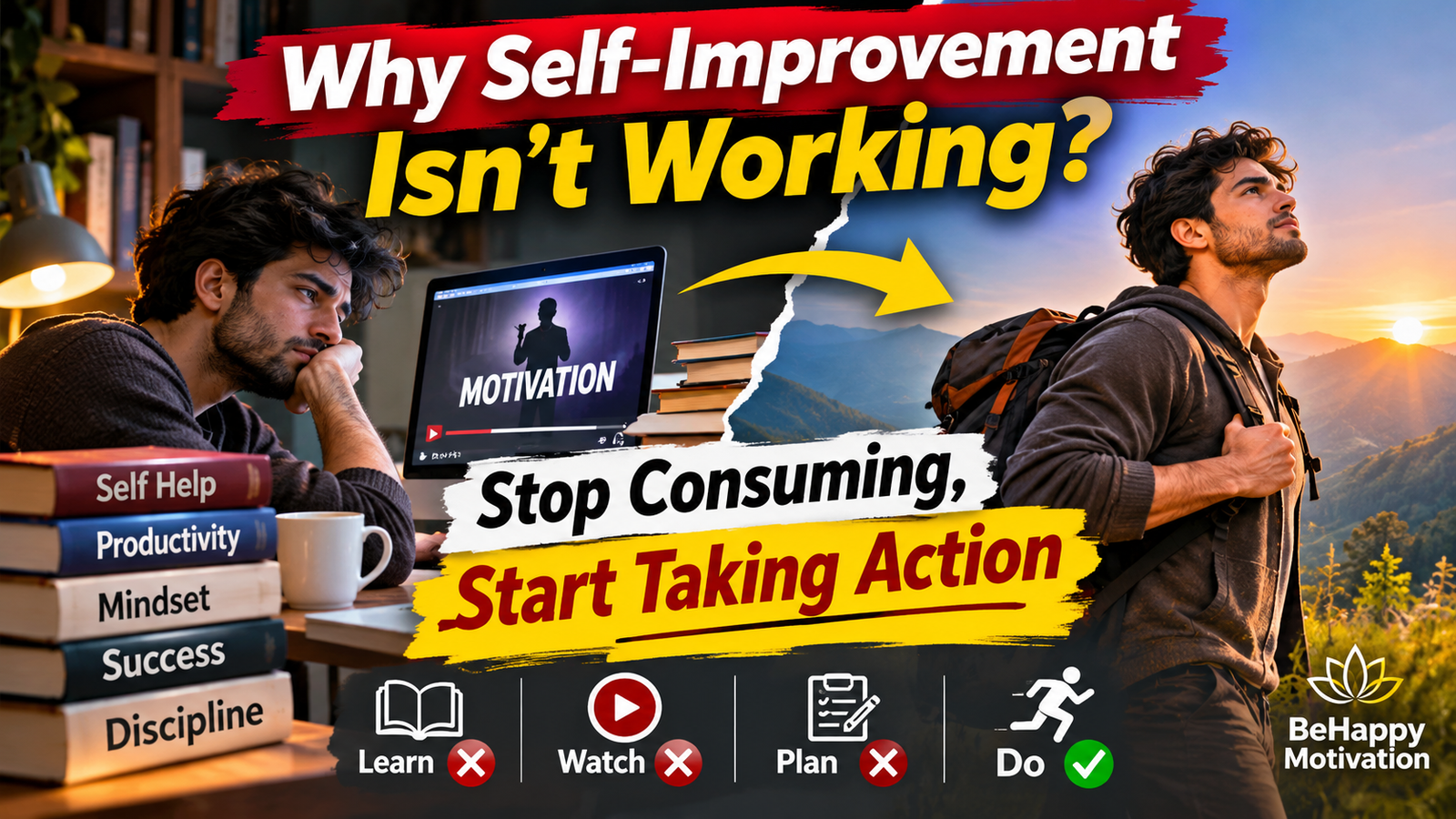
Watching motivational videos, reading self-help books, and collecting personal development advice can make you feel productive, but real transformation only begins when you put what you learn into action.
Have you ever spent hours watching motivational videos, reading self-help books, or listening to successful people share their secrets, only to realise that your life hasn’t changed much?
You feel inspired for a few minutes. You make big promises to yourself. You plan a new routine and imagine the person you want to become. But when the excitement fades, everything returns to normal.
If this sounds familiar, you’re not alone.
One of the biggest problems in personal development is something surprisingly simple: we sometimes confuse consuming knowledge with making progress.
You can spend months learning how to become successful without taking a single meaningful step towards your goals. And the more motivational content you consume, the easier it becomes to believe that you’re moving forward when you’re actually standing still.
Let’s understand why this happens and, more importantly, how to break the cycle.
1. The Illusion of Progress in Self-Improvement
Motivational content makes us feel good. When we watch someone talk about discipline, success, confidence, or overcoming challenges, we experience a temporary emotional boost.
We start imagining our future success. We feel hopeful, excited, and ready to change.
But there is a difference between feeling motivated and actually improving your life.
Imagine someone who watches ten videos about building a successful business but never contacts a potential customer. Another person watches just one video and immediately makes their first sales call.
Who is making real progress?
The second person.
Personal development isn’t measured by how much information you collect. It is measured by how consistently you apply what you learn.
Inspiration can start your journey, but execution is what moves you forward.
2. Why Your Brain Mistakes Learning for Doing
One reason people get trapped in endless self-improvement is that learning feels rewarding.
When you discover a new productivity technique or listen to an inspiring success story, you experience excitement. Your brain enjoys the feeling of discovering something useful.
Unfortunately, that feeling can create a false sense of achievement.
You might feel as though you’ve accomplished something simply because you learned how to do it.
For example:
- Watching fitness videos feels like working towards better health.
- Reading business books feels like building a business.
- Listening to motivational speeches feels like developing discipline.
- Planning your daily routine feels like becoming productive.
But none of these activities automatically produces results.
Knowledge is valuable, but knowledge without application rarely creates meaningful change.
The solution is simple: whenever you learn something useful, identify one practical action you can take immediately.
3. How Productive Procrastination Keeps You Stuck
Procrastination doesn’t always look like laziness.
Sometimes it looks like hard work.
You might spend hours researching the best business strategy, comparing productivity apps, creating schedules, or watching tutorials. Everything appears productive, but you’re avoiding the one activity that could actually move you closer to your goal.
This is called productive procrastination.
It happens when you choose comfortable activities that feel useful instead of uncomfortable activities that demand action.
For example, someone who wants to start a YouTube channel might spend weeks researching cameras, editing software, thumbnails, and video strategies. Yet they never publish their first video.
Why?
Because taking action involves uncertainty. You might fail, make mistakes, receive criticism, or discover that you’re not as good as you expected.
Learning feels safe. Execution feels uncomfortable.
But growth happens when you become willing to experience that discomfort.
4. Escaping the Endless Planning Trap
Planning is important, but too much planning can become another form of avoidance.
You don’t need the perfect morning routine, the perfect business strategy, or the perfect moment to begin.
You need a starting point.
Many people delay their goals because they believe they must understand everything before taking the first step. In reality, clarity often comes through experience.
Instead of spending another week planning your fitness journey, take a 20-minute walk today.
Instead of researching how to write a book for another month, write your first 300 words.
Instead of waiting until you feel confident, start while you’re still uncertain.
Try the following approach:
- Set one clear goal for the next 30 days.
- Break it into small, manageable actions.
- Decide exactly when you will complete each action.
- Stop researching once you have enough information to begin.
- Review your actual progress every week.
Remember, a simple plan followed consistently is more powerful than a perfect plan that never leaves your notebook.
5. Shift from Passive Consumption to Real Action
The biggest change you can make is to stop treating motivation as the destination.
Use it as a starting signal.
The next time you watch a motivational video or read a self-help book, don’t immediately move on to another piece of content.
Ask yourself three questions:
- What is the most useful lesson I learned?
- How can I apply it to my own life?
- What action can I take today?
For example, if you learn about the importance of discipline, choose one habit and practise it today.
If you learn about financial management, review your expenses.
If you learn about building confidence, do something you’ve been avoiding.
A useful rule is to spend more time applying what you learn than collecting more information.
You don’t need another hundred motivational quotes. Sometimes you simply need to act on the one lesson you already understand.
6. Five Daily Habits to Build Genuine Discipline
Discipline isn’t something that appears overnight. It develops through small decisions repeated consistently.
Here are five practical habits to get started:
1. Complete one important task before consuming motivational content.
Make progress on your own goals before watching someone else talk about theirs.
2. Follow the five-minute rule.
If you’re avoiding an important task, commit to doing it for just five minutes. Starting is often the hardest part.
3. Reduce unnecessary information consumption.
You don’t need to watch every productivity video or read every new self-help book. Choose quality over quantity.
4. Track actions, not intentions.
At the end of each day, write down what you actually completed rather than what you planned to do.
5. Keep promises to yourself.
If you decide to exercise, write, study, or work on a project, make a genuine effort to follow through. Small commitments build self-trust.
These habits may seem simple, but consistency is what makes them powerful.
7. Stop Waiting for Motivation. Start Building Momentum.
There will be days when you don’t feel motivated. You will feel tired, distracted, or uncertain about your progress.
That’s normal.
The difference between people who achieve their goals and those who remain stuck isn’t that successful people always feel motivated. It’s that they learn to keep moving even when motivation disappears.
You don’t have to transform your entire life in one day.
Start small. Take one action. Repeat it tomorrow.
If you want to become healthier, exercise today. If you want to build a business, take one step towards finding your first customer. If you want to become more confident, face one situation you’ve been avoiding.
Your future is not created by the number of motivational videos you watch. It is created by the decisions you make when nobody is watching.
Remember: Stop preparing to change your life. Start living the change.
If you enjoy practical lessons about personal growth, discipline, mindset, and overcoming life’s challenges, subscribe to BeHappy Motivation on YouTube for more inspiring content.
Frequently Asked Questions
1. Why do I consume motivational content but never take action?
You may be experiencing a false sense of progress. Learning provides temporary excitement, while taking action requires effort, patience, and the willingness to face uncertainty.
2. How can I stop overthinking and start taking action?
Choose one small task, set a deadline, and begin before you feel completely ready. Focus on completing the next step rather than planning the entire journey.
3. Is watching motivational videos a waste of time?
No. Motivational videos can provide inspiration and useful ideas. However, they become less valuable when you repeatedly consume content without applying its lessons.
4. How do I develop discipline when I have no motivation?
Start with small daily commitments. Build a routine, reduce distractions, track your progress, and learn to complete important tasks even when you don’t feel motivated.
5. What is the difference between productivity and productive procrastination?
Productivity involves completing meaningful tasks that move you towards your goals. Productive procrastination involves doing activities that feel useful but help you avoid important work.