I don’t need a full minute to change the way you see your life. I only need two seconds and two words.
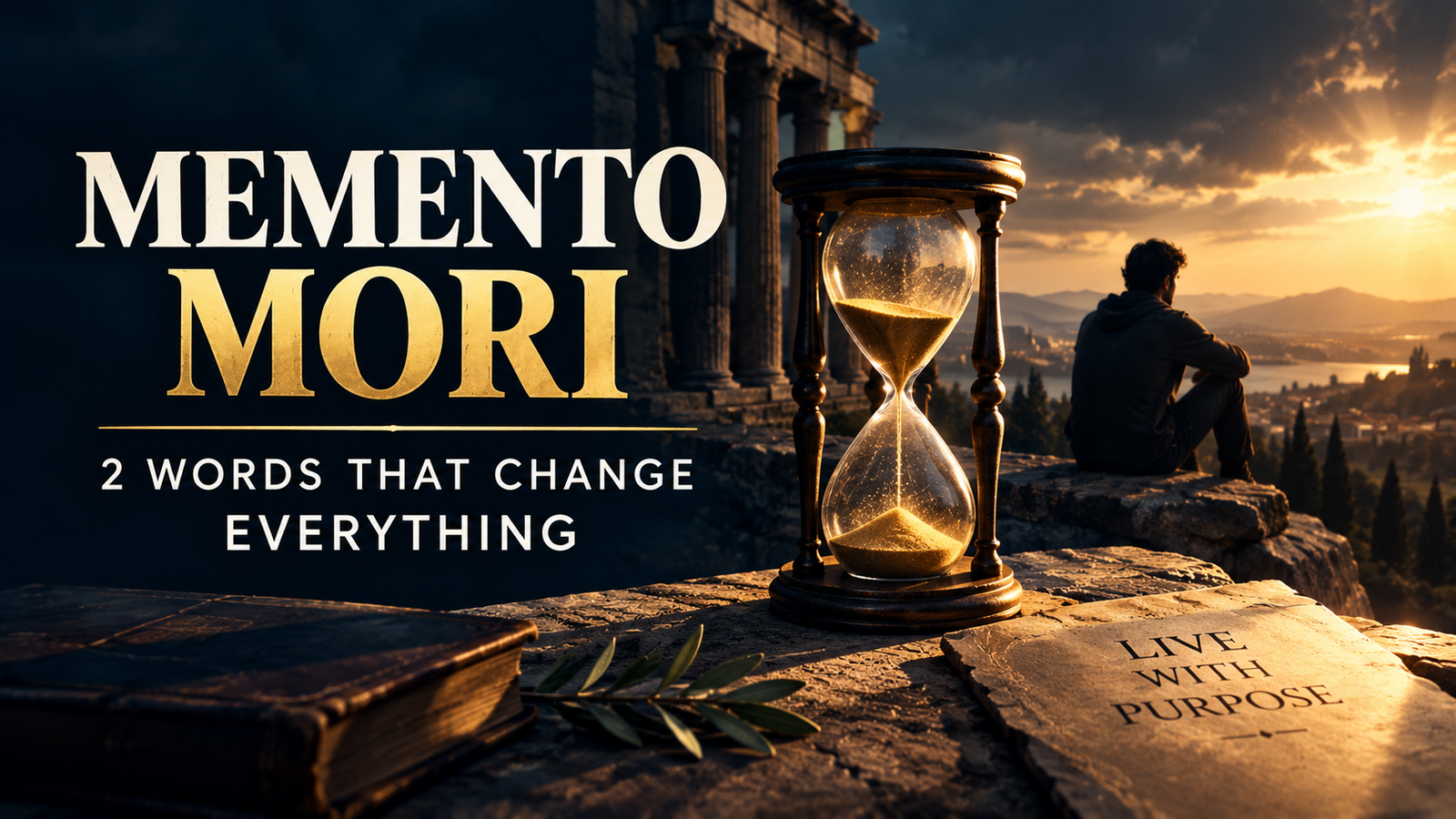
Memento Mori.
Remember that you will die.
At first, these words may sound dark, uncomfortable, or even frightening. But what if remembering your mortality is actually one of the most powerful ways to start living?
Think about it. How many hours have you wasted worrying about what other people think? How many opportunities have you avoided because you were afraid of failing? How many dreams have you postponed because you believed there would always be a better time?
Now imagine looking back at your life and realizing that fear made more decisions for you than courage ever did.
That is the hidden message behind Memento Mori.
1. Memento Mori: Remember That Your Time Is Limited
Memento Mori is a Latin phrase meaning “Remember that you will die.” It is an ancient reminder associated with Stoic philosophy, encouraging people to reflect on life’s impermanence.
The Stoics did not use this idea simply to think about death. They used it to understand how precious life is.
When you remember that your time is limited, your priorities begin to change.
That argument you keep replaying in your head? It becomes less important.
The fear of looking foolish? Suddenly, it doesn’t deserve so much control over your decisions.
The dream you’ve been postponing for years? Maybe it deserves your attention today.
Your time is one of your most valuable resources. Unlike money, you cannot earn back yesterday’s hours.
Remembering death is not about becoming afraid of life. It is about becoming more intentional with the life you have.
2. Stop Worrying About What Everyone Thinks
One of the biggest reasons people don’t live the life they want is the fear of judgment.
You want to start a business, but you’re worried people will laugh.
You want to express your feelings, but you’re afraid of rejection.
You want to change your career, but you keep imagining what friends, relatives, or colleagues might say.
So you remain where you are, waiting for approval from people who are busy managing their own lives.
Here’s a question worth asking:
If your time on this earth is limited, why are you giving so much of it to other people’s opinions?
Not every opinion deserves your attention. Not every criticism deserves a response. And not every person needs to understand your choices.
Live responsibly, treat people with respect, and listen to useful advice. But don’t let the fear of judgment prevent you from becoming who you want to be.
3. Your Fear of Failure Is Stealing Your Present
Failure feels frightening because we often imagine it as a permanent label.
What if the business fails? What if the relationship doesn’t work? What if I try and everyone sees me lose?
But consider the opposite possibility.
What if you never try?
You may spend years wondering what could have happened if you had taken that chance.
Memento Mori reminds you that avoiding every risk is not the same as protecting your life. Sometimes, it simply means allowing fear to make your decisions.
You don’t need to make reckless choices. You need to stop treating every possible mistake as a reason to do nothing.
Start the project. Learn the skill. Have the difficult conversation. Take the first step.
You may not control every outcome, but you can control whether you give yourself a chance.
4. Mortality Gives Ordinary Moments Extraordinary Meaning
We often imagine that a meaningful life is built only through extraordinary achievements.
A successful career. A beautiful house. Financial freedom. Recognition. Travel. Big milestones.
But life is also happening in the ordinary moments we barely notice.
A conversation with someone you love. A quiet morning. A meal with family. A walk in the sunlight. A chance to laugh after a difficult day.
When you become aware that nothing lasts forever, these moments can feel more valuable.
You stop treating happiness as something that begins after you achieve your next goal.
You begin noticing the life that is already happening.
Success matters. Ambition matters. Dreams matter. But don’t become so busy building your future that you forget to experience your present.
5. The Daily Memento Mori Practice: Ask Yourself One Question
You don’t need an hour of meditation or a complicated morning routine to begin applying this philosophy.
Try a simple daily reflection.
Every morning, take a quiet moment and ask yourself:
“If today were my last day, would I spend it the way I am planning to?”
Don’t answer automatically. Think about your priorities.
Would you spend the entire day scrolling through your phone?
Would you continue avoiding an important conversation?
Would you allow a small disagreement to ruin your peace?
Would you postpone something meaningful because you are waiting for perfect circumstances?
You don’t have to abandon your responsibilities or make dramatic decisions. Instead, use the question to identify what deserves more attention.
Perhaps today you need to call someone you love. Perhaps you need to stop procrastinating on an important goal. Perhaps you need to forgive yourself and move forward.
Let the answer guide one meaningful action.
6. Stop Waiting for the Perfect Moment
There is a dangerous illusion that life will eventually become perfect.
One day, you’ll have more confidence. One day, you’ll have enough money. One day, your responsibilities will become lighter. One day, you’ll finally feel ready.
But the perfect moment is not guaranteed to arrive.
You can prepare, plan, learn, and improve. Those things are important. But preparation should eventually lead to action.
Start with what you have. Take a manageable step. Accept that uncertainty is part of being human.
You don’t need to know exactly how everything will work out.
You only need to stop allowing the fear of tomorrow to steal every opportunity from today.
Final Thoughts: Remember Death, But Choose to Live
Memento Mori is not a reminder to live in fear. It is a reminder not to waste the opportunity of being alive.
Your mistakes do not define your entire story. Other people’s opinions do not determine your worth. Your past cannot be rewritten, but your next decision is still yours to make.
So take the risk that deserves taking. Speak the truth with kindness. Spend time with people who matter. Pursue meaningful goals. Stop postponing every important thing until some imaginary perfect day.
And tomorrow morning, before the noise of the world takes over, ask yourself one question:
“If today were my last day, what would I do differently?”
Then do one of those things.
Because the real tragedy is not simply that life ends.
It is forgetting that life is limited and living as though you have unlimited time.
Memento Mori. Remember you will die. And more importantly, remember to live.
If this message made you think differently about your life, share it with someone who needs the reminder. Follow BeHappy Motivation for more ideas on mindset, discipline, courage, and personal growth.
Frequently Asked Questions
What does Memento Mori mean?
Memento Mori is a Latin phrase meaning “Remember that you will die.” It is a philosophical reminder of mortality, traditionally used to encourage reflection, gratitude, and intentional living.
Is Memento Mori part of Stoic philosophy?
Yes. Remembering mortality is an important theme in Stoic philosophy. Thinkers such as Seneca and Marcus Aurelius reflected on life’s brevity and the importance of using time wisely.
How can Memento Mori change your life?
It can help you reconsider your priorities, spend less time worrying about insignificant things, appreciate relationships, and take meaningful action instead of endlessly postponing your goals.
Should I think about death every day?
You can use a brief, healthy reflection on mortality as a reminder to appreciate life. The intention is to encourage gratitude and purposeful action, not to create anxiety or obsessive thoughts.
What is the best Memento Mori daily practice?
Start your morning by asking: “If today were my last day, what would I do differently?” Choose one meaningful action based on your answer and make time for it.